Beyond the Grind: Why Expert Knife Sharpening in Bucks County Matters
A dull chef knife does not just make dinner prep slower. It slips on tomato skins, crushes herbs, and asks you to use more force than a sharp blade should require. Reliable knife sharpening Bucks County homeowners can count on starts with recognizing that the right edge is not the same for every knife.
A thin Japanese kitchen blade, a workhorse German chef knife, a hunting knife, and a pocketknife may all look like they need sharpening. In practice, they need different angles, finishes, and levels of durability. The goal is not simply to make a blade feel sharp for a day. It is to restore clean cutting performance while preserving useful steel and respecting the knife's intended purpose.
Why Professional Knife Sharpening in Bucks County Matters
Many knives arrive dull because of normal use. Others have been damaged by glass cutting boards, dishwasher cycles, hard bones, staples, outdoor work, or a rushed pass through a pull-through sharpener. Those tools can have a place for quick maintenance, but they often remove more metal than necessary and can leave a rough, uneven edge.
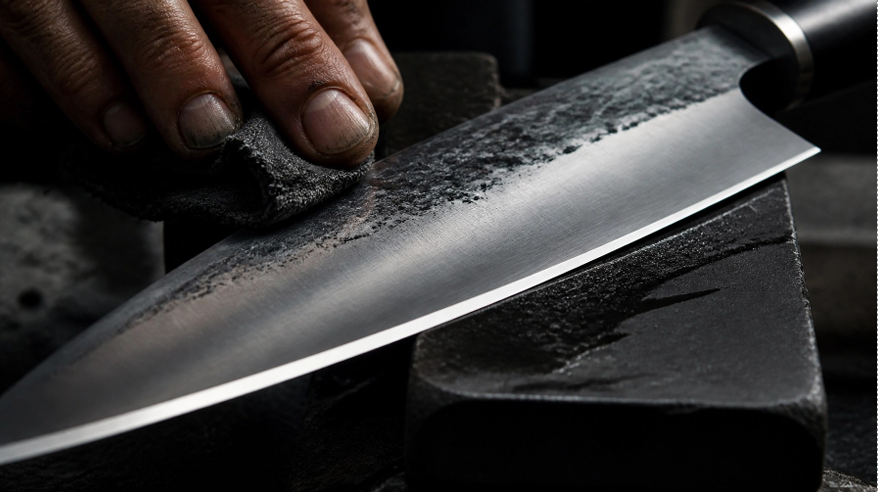
Professional sharpening begins with an inspection, not a grinder. A blade needs to be evaluated for steel type, existing bevels, edge damage, rust, loose handles, warped profiles, and broken tips. This determines whether it needs a straightforward sharpening or more involved repair and restoration work.
That distinction protects the knife. A quality blade should not be ground heavily simply because it is dull. Conservative material removal helps preserve blade life, keeps geometry closer to its intended design, and avoids turning a fine cutting tool into a thick, clumsy one over repeated services.
For many Bucks County customers, that also means peace of mind. Kitchen knives may be expensive tools used every day. Hunting and tactical blades need dependable edge retention. A pocketknife may have traveled with its owner for decades. An heirloom carving knife can carry family history that has nothing to do with its market value. Each deserves careful handling.
The Right Edge Depends on How You Use the Knife
Sharpness is not a single setting. Edge angle is one of the most important decisions in sharpening because it controls the balance between slicing ability and durability.
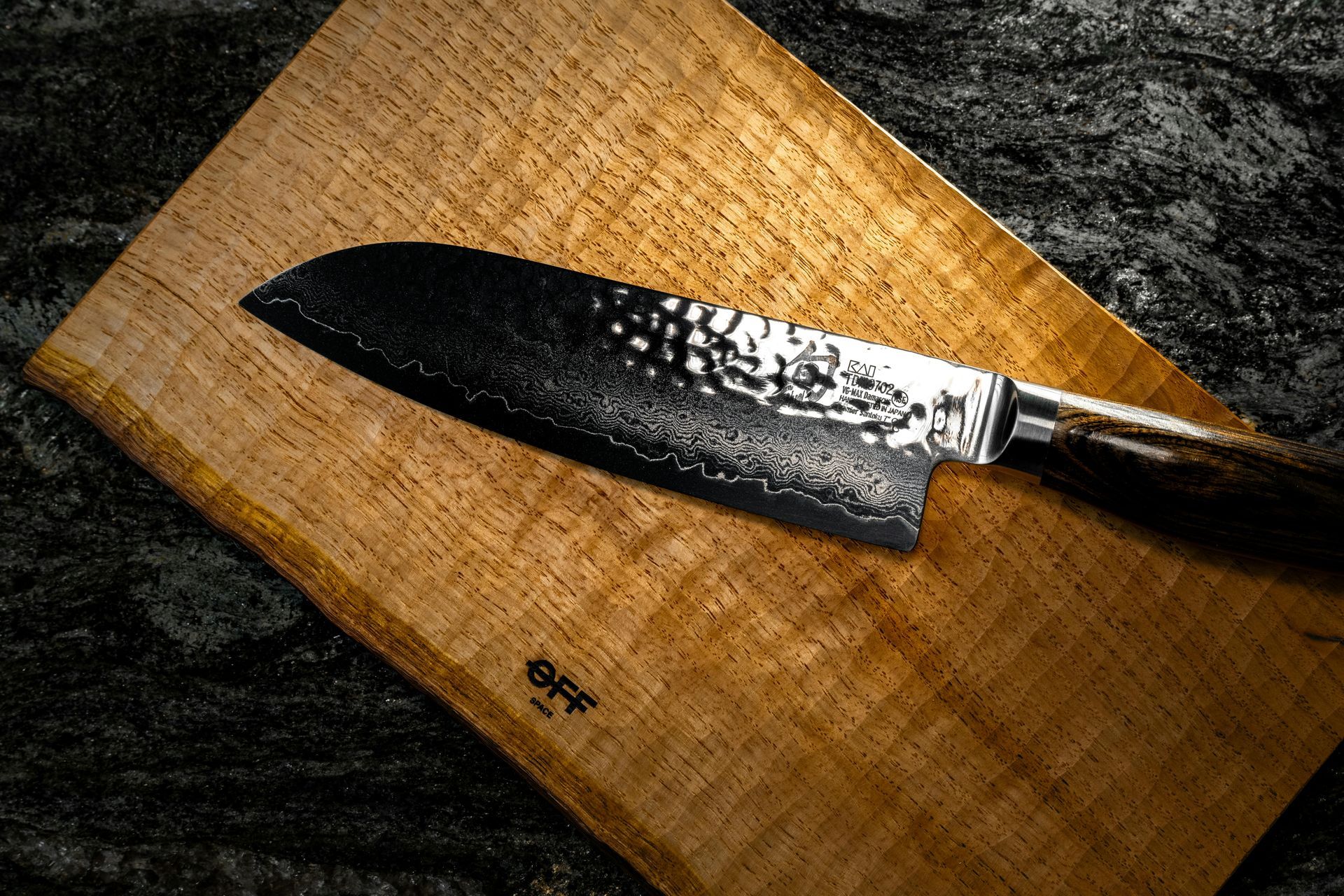
Most kitchen knives perform well in a range of roughly 12 to 20 degrees per side, depending on their steel, grind, and use. A thin, high-quality Japanese blade may benefit from a lower angle that creates exceptional slicing performance for vegetables, boneless proteins, and precise prep work. That edge can be very refined, but it is not intended for twisting through joints or striking a hard cutting surface.
A heavier Western-style chef knife often calls for a slightly more durable angle. It can still cut cleanly through onions, herbs, and roasts while standing up better to the broader range of tasks found in a busy home kitchen.
Tactical, hunting, and outdoor knives commonly fall closer to 20 to 25 degrees per side. These blades may cut rope, dress game, handle wood processing, or see general utility use. A more durable edge is usually the better choice, even if it does not have the delicate feel of a low-angle kitchen edge.
A micro-bevel can further strengthen the very edge of the blade. This is a small, carefully applied secondary bevel that improves stability without sacrificing the overall cutting geometry. It is a useful option for customers who want a kitchen knife to stay sharp longer or an outdoor knife to resist rolling and minor chipping in field use.
What Happens During a Proper Sharpening Service
A disciplined sharpening process follows the condition of the blade rather than forcing every knife through the same sequence. At The Knife Guy, the work begins with a direct assessment of what the blade needs and what it should not receive.
Inspection and Damage Assessment
The first step is checking the edge and profile under good light. Small chips, flat spots, rolled sections, rust, pitting, and uneven previous sharpening all affect the approach. A broken tip may be repairable, but the best repair is one that restores a functional point while keeping the blade's profile natural.
Rust deserves special attention. Surface rust can often be removed safely, while deeper pitting may require a more conservative decision. Removing every mark is not always wise if it means taking excessive material from a blade. For valuable or sentimental knives, preserving integrity often matters more than making the steel look brand new.
Repair and Re-Profiling When Needed
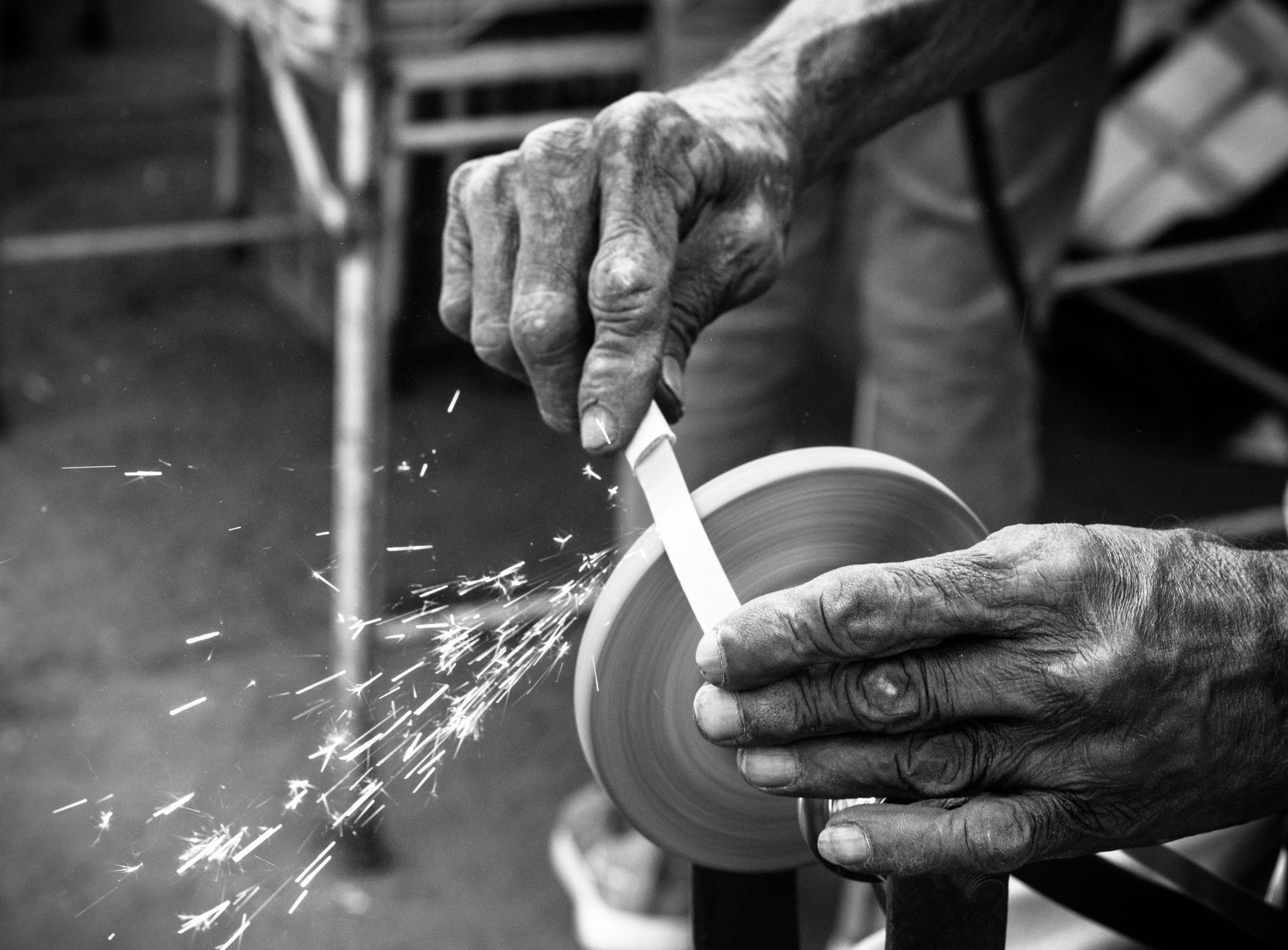
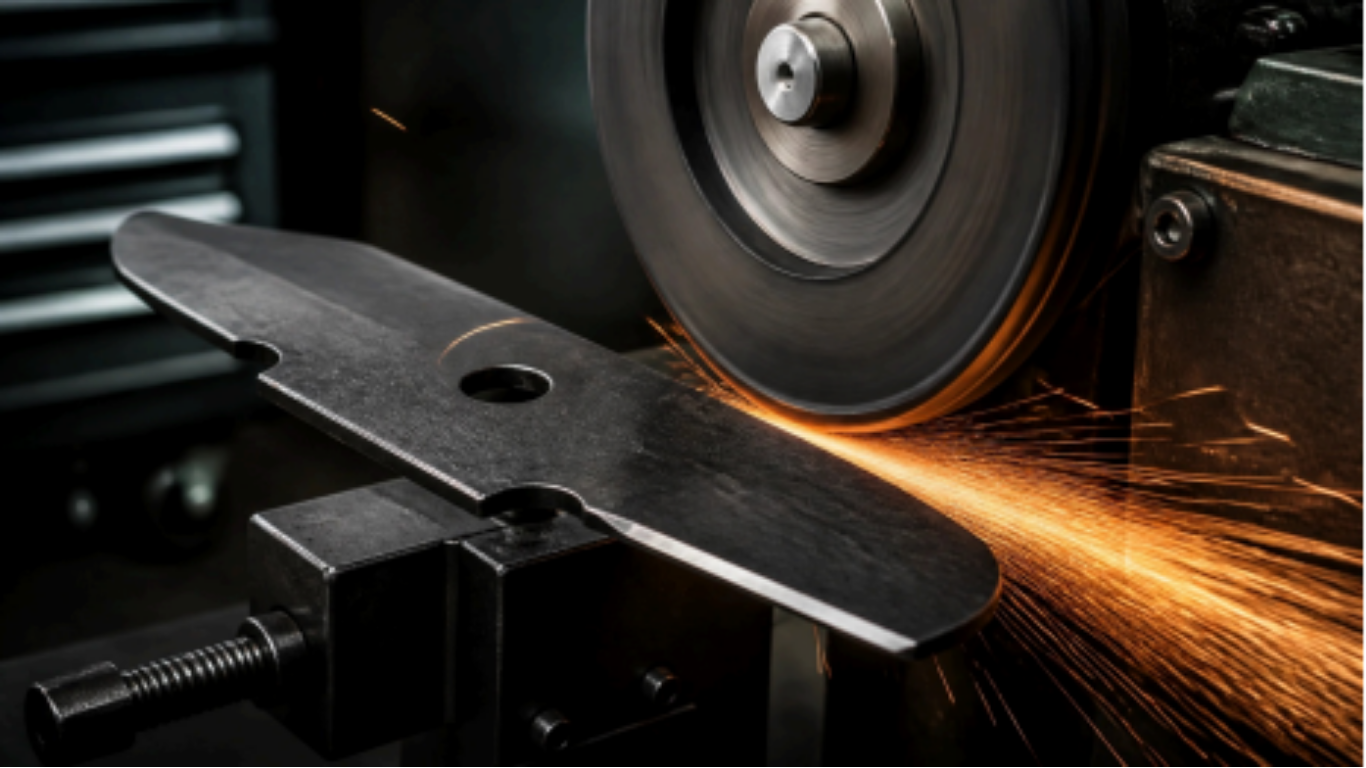
Chips and damaged edges cannot simply be honed away. They must be removed through controlled grinding before the final bevel can be established. If a knife has been sharpened unevenly over time, re-profiling may be necessary to restore a consistent edge angle and improve cutting control.
This part of the process requires restraint. Aggressive grinding may produce a quick visual result, but it can shorten the life of the blade, alter its balance, and generate excess heat. Careful repair takes longer, but it produces a better working edge and retains more of the knife.
Sharpening, Honing, and Finishing
Once the blade is ready, the edge is sharpened to the specified angle. The finish is chosen to match use. A refined edge may be ideal for push-cutting vegetables and clean slicing, while a slightly toothier finish can work well for tomatoes, crusty bread, rope, and other fibrous materials.
Honing and hand-stropping remove the remaining burr and refine the apex of the edge. This is where a knife moves from merely ground to truly sharp. A proper finish should feel controlled, clean, and purposeful, not jagged or overly polished for the work it needs to do.
Final performance checks confirm that the edge is continuous and that the blade cuts predictably from heel to tip. The test is not whether it can shave arm hair. The real test is whether it performs safely and efficiently in the work it was designed to handle.
Serrated Knives and Specialty Blades Need Different Treatment
Serrated kitchen knives, bread knives, and utility blades should not be treated like plain-edge knives. Their scallops must be sharpened individually or with the appropriate process, then cleaned up on the opposite side without flattening the serration pattern. A generic sharpening counter may decline these blades or grind them in a way that reduces their useful life.
The same principle applies to Japanese blades, recurves, pocketknives, axes, hatchets, and specialty outdoor tools. Their profiles and edge needs are different. An axe, for example, needs a tougher working edge than a slicing knife, while a fine pocketknife may need a careful blend of sharpness, edge retention, and easy field maintenance.
If you are unsure what angle or finish is right, describe how you actually use the tool. That information is more valuable than asking for the sharpest possible edge. A blade used for delicate food prep needs a different answer than one carried for camping, hunting, or everyday utility.
How to Keep a Fresh Edge Longer
Professional sharpening lasts longer when daily habits support it. Use wood or quality plastic cutting boards rather than glass, ceramic, marble, or granite. Hand-wash and dry knives instead of putting them through the dishwasher, where heat, detergent, and contact with other utensils can damage both edges and handles.
Store knives so their edges do not strike other metal objects. A knife block, magnetic holder with proper spacing, edge guards, or a dedicated drawer insert all work better than tossing knives loosely into a drawer.
A honing rod can help maintain certain kitchen knives between sharpenings, but it does not replace sharpening. Honing realigns a slightly rolled edge. It cannot restore steel that has worn away or repair chips. Used too aggressively or at the wrong angle, it can make the edge worse.
Pay attention to the signs that service is due. If the knife slides off an onion skin, tears herbs, leaves ragged cuts in meat, or requires downward force to start a slice, it is time for evaluation. Waiting until the edge is severely damaged can mean more repair work and more material removal than routine maintenance would require.
A well-maintained knife should make the task feel easier, not make you fight the tool. Whether it is the chef knife you reach for every night, the hunting knife you depend on in season, or an old family blade worth preserving, careful sharpening keeps it useful for the next meal, trip, or generation.