Publication Date: Wednesday, April 15, 2026
Category: Knife Repair & Maintenance
Author: John Joseph Ketterer, Owner
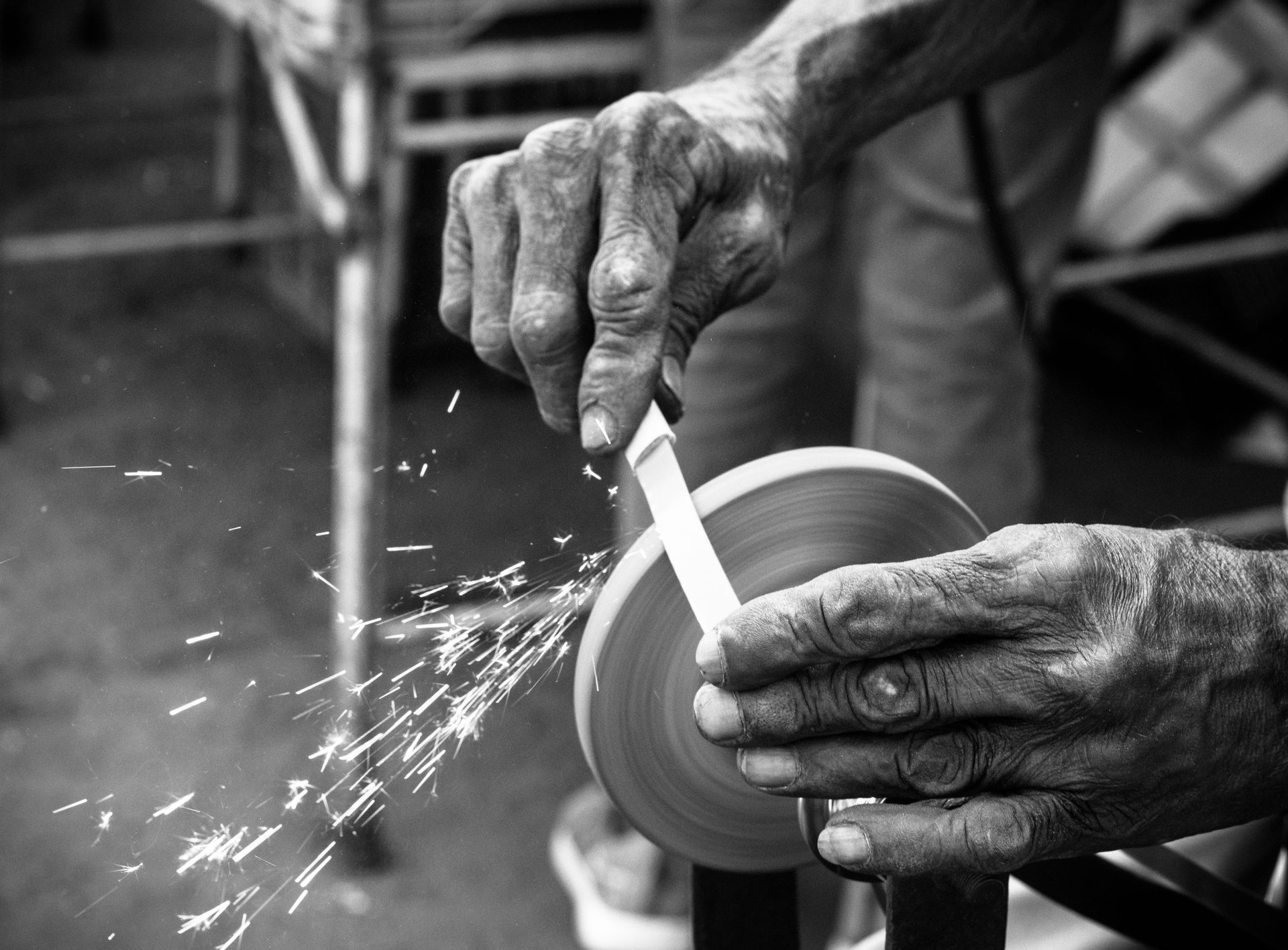
Sharpening a knife is a routine task. Restoring a knife is a technical overhaul.
Most people search for "knife repair near me" because they have a blade that no longer functions. Often, the damage goes deeper than a dull edge. A simple pass on a grinding wheel won't fix a cracked handle, a rusted tang, or a warped blade profile.
Professional knife restoration services involve a multi-stage process to return a tool to its peak performance and aesthetic glory.
The Critical Difference: Sharpening vs. Restoration
Understanding the distinction is the first step in proper tool maintenance.
Sharpening
The removal of a small amount of metal from the cutting edge to create a new apex. It is preventative maintenance.
Restoration
The structural and aesthetic recovery of a blade. This includes rust removal, handle replacement, chip repair, and profile reshaping.
If your blade is bent, chipped, or buried in rust, a standard sharpen will fail. You need a full restoration.
Phase 1: The Professional Inspection
Every project begins with a rigorous assessment. We look for flaws that the untrained eye misses.
- Steel Temper: Checking for “burnt” edges caused by improper high-speed grinding
- Structural Integrity: Inspecting for micro-cracks or loose rivets
- Blade Geometry: Identifying uneven wear, concave sections, or distortion
- Bonding: Evaluating the seal between blade and handle to prevent contamination
Phase 2: Chemical and Mechanical Cleaning
Rust is the enemy of steel. It is not just cosmetic—it actively degrades the material.
- Degreasing: Removing oils, residue, and buildup
- Rust Neutralization: Using solvents or citric acid baths
- Mechanical Abrasion: Removing pitting with wire brushes or low-grit sandpaper (80–120 grit)
- Solvent Wipe: Ensuring a clean surface before reshaping
Phase 3: Reclaiming the Geometry
This is where true restoration happens. Over time, blades lose their original shape.
- Profiling: Grinding back to the original blade silhouette
- Thinning: Reducing thickness for better cutting performance
- Chip Removal: Eliminating nicks and restoring a continuous edge
Phase 4: The Progressive Grit System
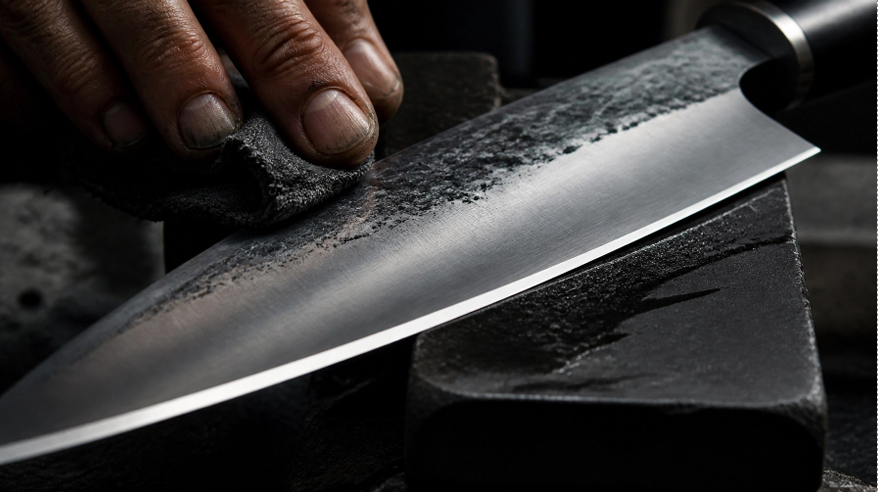
Restoration requires a systematic progression of abrasives—not just a quick grind.
- Coarse (120–400 grit): Major shaping and metal removal
- Medium (600–1000 grit): Establishing the cutting bevel
- Fine (2000–5000 grit): Refining the surface
- Ultra-Fine (8000+ grit / stropping): Mirror-polished, high-performance edge
Phase 5: Handle Repair and Ergonomics
A knife must feel as good as it cuts.
- Wooden Handles: Sanding, crack repair, and conditioning with oil or beeswax
- Synthetic Handles: Buffing and securing rivets
- Tang Cleaning: Removing hidden rust beneath handle scales
Phase 6: Polishing and Finishing
A restored knife should look as good as it performs.
- Satin Finish: Durable, hides wear
- Mirror Polish: High-gloss for premium knives
- Forced Patina: Protective oxidation layer for carbon steel
Why Professional Inspection Matters
DIY restoration can easily damage a blade permanently.
Professional services provide:
- Coolant Systems: Prevent overheating and loss of temper
- Precision Angles: Consistent edge geometry (15–20 degrees)
- Specialized Tooling: Equipment not available in standard shops
Beyond the Kitchen: Tools That Need Restoration
Restoration isn’t limited to chef knives.
- Garden Tools: Loppers, shears, shovels
- Outdoor Gear: Axes, machetes, survival knives
- Heirlooms: Vintage tools with sentimental value
Action Steps for Your Blades
If your knife is past its prime, don’t throw it away.
- Assess: Look for rust, damage, or looseness
- Clean: Apply light oil to prevent further corrosion
- Consult: Get a professional opinion
- Visit: Schedule a check-up or drop-off
Summary of the Restoration Process
Inspection
Visual and manual check to identify hidden structural flaws.
Rust Removal
Chemical and mechanical processes to stop corrosion and expose clean steel.
Reshaping
Heavy grinding to restore the blade’s original profile and remove damage.
Sharpening
Progressive honing to create a precise, functional cutting edge.
Handle Work
Refinishing and tightening to ensure comfort, safety, and durability.
Polishing
Buffing to improve appearance and add surface protection.
Contact The Knife Guy
Ready to bring your blades back to life?
- Browse our full list of services
- Read more on our blog
- Contact us for a quote
Don’t settle for a dull, damaged blade. Give your tools the professional treatment they need to last another lifetime.
At The Knife Guy, we don’t just grind steel—we restore utility.